
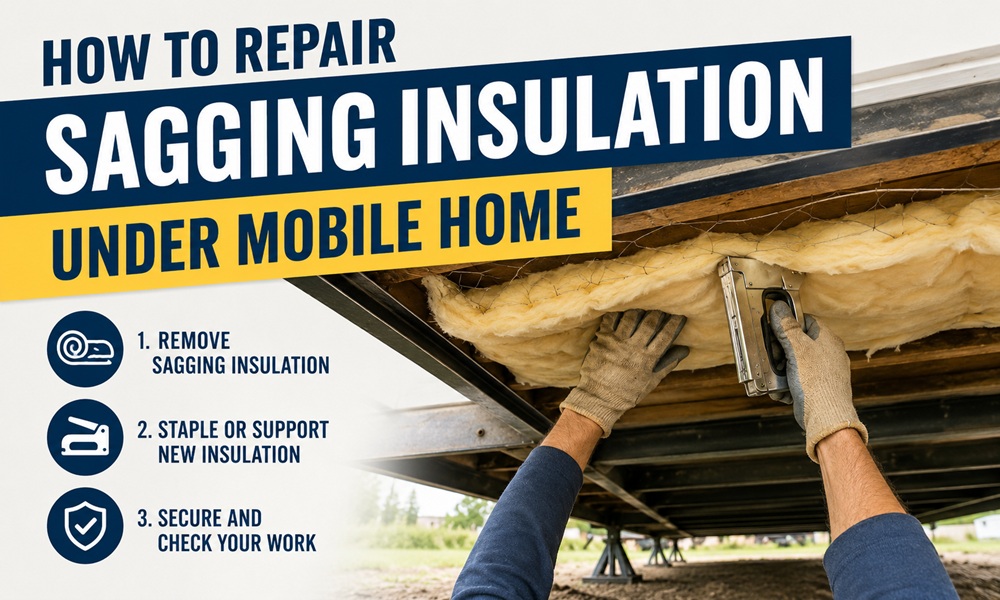
A belly wrap hanging in low, sagging pockets between the joists is one of the most common — and most misunderstood — problems under a mobile home. It looks like a simple cosmetic droop, but a sagging belly is usually the visible symptom of a deeper problem: water has gotten in, rodents have moved through, or a plumber cut the membrane open years ago and never patched it. Treat the droop alone and it comes right back. Treat the cause and re-support it correctly and the repair will outlast the rest of the home. This guide shows how to tell which situation you have and how to fix each one.
Why mobile home insulation sags in the first place
Because the floor is built upside-down, the only thing holding the batts up is the belly wrap stapled across the joists. There is no plywood beneath them — just the membrane. Over years that membrane is attacked by road vibration from the original move, rodents looking for a warm nest, UV breakdown at the exposed edges, and — most often — past plumbing repairs where someone cut the belly open to reach a pipe and never sealed it back up. Once the wrap fails at any point, gravity does the rest: insulation droops, then drops to the ground, leaving the floor and pipes exposed to the cold.
One commonly reported case shows how far this can go: nearly half the fiber insulation in a 1980s home was found resting on the ground, soaking up moisture and doing nothing at all. That is the typical end state of a belly left unchecked for a decade or two. By the time you notice cold floors or a sagging belly from the outside, the insulation behind it is often already compromised.
First, diagnose what you’re dealing with
Suit up before you crawl under — a disposable coverall, respirator, gloves, and eye protection. Watch for live wires; people have been shocked working under homes, so carry a voltage tester and a good headlamp. Then map the underside methodically and look for:
- Holes and tears, especially under sinks, tubs, and the water heater where plumbers most often cut access.
- Wet or matted insulation and damp ground — a sign of a plumbing leak or poor site drainage that must be fixed before you re-insulate.
- Sagging or disconnected ducts and water lines hanging down into the dirt.
- Rodent nests, droppings, and chewed insulation or wiring (a fire and health hazard, not just an insulation issue).
- Whether the bulk of the wrap is sound and only locally damaged (patch it) or effectively gone and brittle (replace it).
Take photos as you go. They help you plan materials, and if you end up hiring part of the work out, they let a contractor quote accurately without a second crawl. Mark the worst spots with tape or chalk so you can find them again once you are covered in fiberglass and working in poor light.
Repair vs. replace — make the call
The decision usually comes down to how much of the membrane is still doing its job. Use the table below to decide whether you are patching, re-supporting, or starting over:
| Condition you find | Best response | Rough effort |
| Small tears, wrap otherwise sound and dry | Push insulation up, patch with belly tape | Low — an afternoon |
| Localized sag, insulation slipping but intact | Re-support with wire/netting, patch wrap | Moderate — a weekend |
| Widespread sag, wet or fallen insulation | Lower section, remove insulation, re-insulate, new wrap | High — multi-day |
| Brittle, rodent-eaten, or rotted wrap | Full belly replacement | High — consider a pro |
A useful rule of thumb: if more than roughly a third of the wrap is damaged, or if the membrane crumbles when you press it, you will spend more time chasing patches than a full re-wrap would take. At that point, replacement is both faster and more durable.
How to patch a small tear (the quick fix)
- Brush or vacuum dust and debris off the membrane around the tear so tape can grip clean material.
- Push the sagging insulation back up into the cavity and hold it with a length of support wire if it will not stay on its own.
- Cut a piece of belly-repair tape that overlaps the tear by at least 2 inches on every side.
- Press it on and warm it with a heat gun — gentle heat dramatically improves the bond and helps it stick in cold weather.
- Seal any nearby pipe or wire penetrations while you are there; they are the most likely place the next tear will start.
How to re-support and re-insulate a sagging section
When the insulation has slipped but the wrap is mostly intact, the goal is to get fresh, dry insulation back up and hold it there permanently:
- Lower the wrap along the sagging bays by removing staples or carefully slitting the seam.
- Pull out any wet, matted, or fallen insulation. If the ground is damp, find and fix the moisture source before going further.
- Fit new batts or rigid board up to your climate zone’s R-value target.
- Hold the insulation up with support wire (“tiger teeth”), staple-up netting, or thin lath strips run across the joists so it cannot droop again.
- Reattach the wrap with belly tape and screws-and-washers, sealing every seam and penetration.
Support methods compared
How you hold the insulation up is what determines whether the repair lasts. The three common methods each have a place:
- Support wire (“tiger teeth”): stiff wire cut slightly long and sprung between joists. Fast, cheap, and reusable — the go-to for batts.
- Staple-up netting or housewrap: a continuous membrane stapled across the joists under the insulation. More work, but it supports everything evenly and adds a second air-control layer.
- Lath strips: thin wood or plastic strips screwed across the joists. The most rigid option, good where rodents have been a problem because there is less for them to push past.
What it costs
A localized patch is largely a materials cost — a roll of belly tape and some support wire. A full re-wrap is where the money goes:
- DIY patch or single-bay repair: roughly $50–$200 in tape, wire, and insulation.
- Professional repair of a damaged section: commonly $300–$1,000 depending on access and extent.
- Full belly wrap replacement (single-wide): often $1,000–$3,000 installed, more for double-wides or severe rodent or rot damage.
Frequently asked questions
What tape actually works on a belly board?
Use a purpose-made belly-repair or bottom-board tape (often sold as Flex-Mend or similar). Standard duct tape will not bond to the polyethylene membrane and peels within months. Warming the proper tape with a heat gun gives the strongest bond.
Can I just stuff new insulation up and tape over the hole?
For a small, dry, sound area, yes. But if the insulation is wet or the wrap is widely damaged, that traps moisture and the sag returns. Diagnose the cause first and re-support the insulation so gravity is not working against your patch.
Do mice really cause this much damage?
Yes. Rodents nest in the warm insulation, chew the membrane and wiring, and their droppings create a health hazard. Any belly repair should include sealing entry points and removing nests, or the new work becomes their next home.
Is a sagging belly an emergency?
Not instantly, but it accelerates. Exposed pipes are more likely to freeze, energy bills climb, and an open membrane invites pests and moisture. Addressing it before winter is the smart move; a fallen belly over a wet crawl space can rot floor framing within a season or two.
Should I replace the insulation type while I am under there?
It is a good opportunity. If you are already opening the belly, upgrading from sagging batts to rigid foam board or adding a support membrane often costs little more and dramatically improves how long the repair lasts.
