
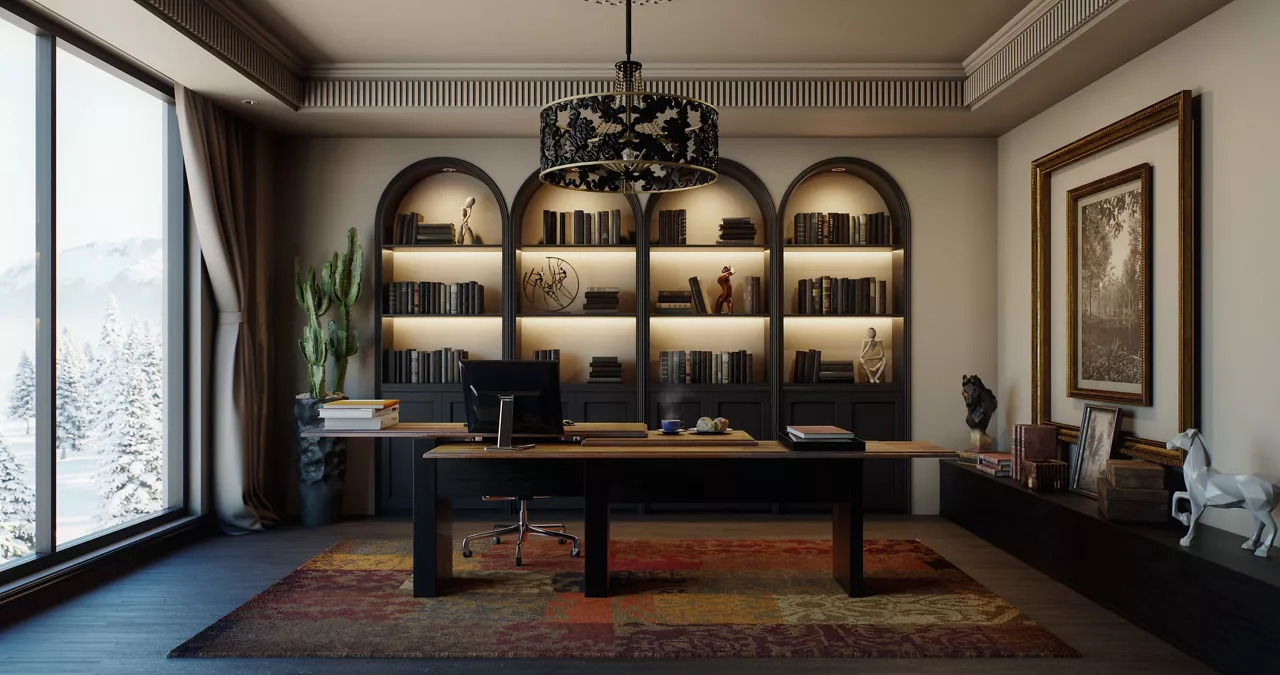
A home office works best when light, acoustics, and layout are solved before furniture. While many start with furniture, looking into home office design ideas first ensures you don’t end up with a setup that gives you eye strain or aching backs. The sequence matters.
The three non-negotiables: quality light (preferably natural), acoustic control, and ergonomic seating. Get those right and the aesthetic choices become the easy part.
The Three Non-Negotiables
- Light: Position the desk perpendicular to windows – not facing them (glare on screen) and not with your back to them (glare on face for video calls). If natural light is insufficient, a daylight-temperature LED desk lamp (5000K-6500K) reduces eye fatigue significantly
- Acoustics: Hard floors, bare walls, and high ceilings turn a home office into an echo chamber. A rug, soft furnishings, and bookshelves with books all absorb sound meaningfully. Acoustic panels don’t have to look clinical – there are fabric-covered options in any color
- Ergonomic seating: The chair should support the lower back in its natural curve, with feet flat on the floor and elbows at 90 degrees when typing. This isn’t about expensive chairs – it’s about setup. A $200 chair with correct positioning beats a $1,000 chair used badly
Home Office by Room Type
| Room Type | Setup Approach | Key Challenge | Best Desk Choice |
| Dedicated spare room | Full setup – desk, storage, seating | Making it feel professional, not like a guest room with a desk | L-shaped or large single desk with built-in storage |
| Bedroom corner | Compact, needs visual separation from sleep zone | Switching off mentally when work and sleep share space | Floating wall desk or small L-shape |
| Living room nook | Must blend with home decor | Noise from household, lack of separation | Console-style desk that looks like furniture |
| Closet conversion (cloffice) | Everything concealed when not in use | Ventilation, lighting, limited depth | Wall-mounted fold-down desk |
| Open plan area | Defined zone within larger space | Distractions, background noise on calls | Freestanding desk with shelf or bookcase behind as backdrop |
Desk Setup Options
- Standing desk: Sit-stand desks reduce the risk of the back pain that accumulates over multi-year WFH setups. Entry-level electric options start around $350 and are worth it for full-time remote workers
- L-shaped desk: Gives dedicated zones – primary screen/work area on one side, reference materials, second monitor, or printer on the return. Works well in corner spaces
- Floating wall-mounted desk: Creates a work area in minimal footprint – ideal for bedroom corners or small apartments. No legs means the floor is clear, which visually expands the room
- Built-in desk with shelving above: The most storage-efficient setup. Usually the best choice for a dedicated office room where you’ll stay long-term
Storage Without Chaos
- Shelving above the desk: The most efficient use of vertical space – keep frequently referenced items at eye level, archives higher
- Filing cabinet below the desk: Doubles as a second surface if flat-top; on wheels is better than fixed for flexibility
- Cable management from day one: A cable spine, under-desk cable tray, and a power strip with surge protection attached under the desk surface removes 80% of desktop cable chaos before it starts
- Pegboard behind the desk: Highly practical for creatives – holds tools, headphones, notebooks, plants, and shelves in a customizable grid
Acoustic Solutions (That Don’t Look Like a Recording Studio)
| Solution | Effectiveness | Cost | Aesthetic Impact |
| Large area rug | Good (absorbs floor reflections) | $80-$400 | Positive – adds warmth |
| Bookshelf filled with books | Good (diffuses + absorbs) | $100-$500 | Positive – signals intellect, adds character |
| Fabric acoustic panels | Very good | $30-$150 per panel | Neutral-Positive if color-matched |
| Heavy curtains | Good (especially at windows) | $50-$200 | Positive – adds softness to hard room |
| Upholstered furniture | Moderate | Varies | Positive |
| Sound-dampening paint | Low (marginal effect) | $30-$60/gallon | Neutral |
Home Office Style Ideas
- Scandinavian: Light wood desk, white walls, minimal decor, a single plant, warm daylight bulbs. Maximizes calm focus
- Industrial: Black metal shelving, exposed brick or brick-effect wallpaper, Edison bulbs, dark wood. Strong and confident
- Warm/Natural: Oak furniture, woven baskets, warm cream walls, lots of plants, linen curtains. The most popular WFH aesthetic right now – works well on video calls
- Bold/Maximalist: Dark painted walls (forest green, navy), gallery wall, layered rugs, statement desk lamp. Surprisingly productive for creative workers – the richness stimulates rather than distracts
Video Call Background: It’s Part of the Design Now
If you’re on calls regularly, your background is part of your professional presentation. A few principles:
- Bookshelf behind you: Always reads as professional and credible – even an imperfectly organized one
- Avoid backlit setups: If a window is behind you, you’ll appear as a silhouette to everyone on the call. Light should come from in front of you
- Soft, solid-color wall: Works well if styled with one or two pieces of art – not three different posters at random angles
- Ring light or key light: A small LED panel at eye level corrects poor ambient lighting and makes a dramatic difference to how you appear on screen
Final Thought
The best home office isn’t the most beautiful one – it’s the one that makes you actually want to sit down and start working. That usually means it’s comfortable, it has good light, it’s quiet enough to think, and it doesn’t feel like a compromise between ‘working from home’ and ‘just working.’
