
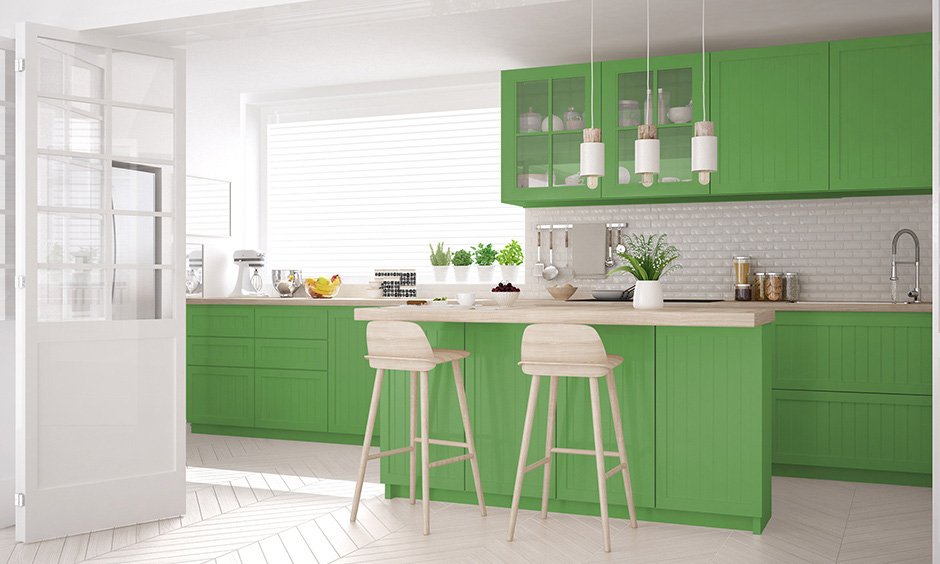
Green cabinets in kitchen spaces have held their place as one of the most requested design choices since 2020—and unlike some trends, they show no sign of burning out. The reason is simple: green is tied to nature, and nature doesn’t date. Whether you go sage, forest, olive, or deep emerald, there’s a version of green that works in almost any kitchen.
The key is choosing the right shade for your light conditions, your countertop, and the style of your home. Get that right and green cabinets will still look considered and current a decade from now.
Why Green Works So Well in Kitchens
- It pairs naturally with wood – the two materials that make kitchens feel warm and lived-in
- It reads as both modern and traditional depending on the shade, which is rare for a bold color
- It contrasts beautifully with white countertops and complements warm stone and butcher block equally
- It photographs well – not irrelevant if resale value matters to you
- Unlike trendy colors (blush, millennial yellow), green’s connection to the natural world gives it longevity
Shades of Green: Which One Is Right for Your Kitchen?
| Green Shade | Vibe | Best Kitchen Style | Light Requirement | Popular Paint References |
| Sage | Soft, dusty, muted | Farmhouse, Scandi, transitional | Works in most light – best in natural light | Farrow & Ball Mizzle, Behr Pewter Green |
| Forest / Deep Green | Rich, dramatic, confident | Modern, traditional, moody | Needs good natural or artificial light – can go dark in dim rooms | Farrow & Ball Calke Green, Benjamin Moore Essex Green |
| Olive | Earthy, warm, vintage | Mediterranean, eclectic, 70s revival | Warm-toned light enhances it; cool light makes it look murky | Sherwin-Williams Oakmoss, PPG Olive Branch |
| Mint / Pale Green | Fresh, retro, playful | Retro, coastal, breakfast nook kitchens | Best in bright kitchens – can feel cold in dark spaces | Benjamin Moore Palladian Blue (adjacent), Dunn-Edwards Mint Sprig |
| Emerald / Dark Jewel | Bold, luxurious, statement | Modern glam, maximalist, large kitchens | Requires excellent lighting and balance with light surfaces | Farrow & Ball Studio Green, PPG Phthalo Green |
| Sage-Gray (dusty) | Sophisticated, contemporary | Modern farmhouse, contemporary | Very flexible – works across light levels | Behr Dusty Miller, Sherwin-Williams Clary Sage |
What to Pair with Green Cabinets
Countertops and hardware do as much work as the cabinet color itself. Here’s what pairs well – and why:
| Element | Best Pairings with Green | Why It Works | Avoid |
| Countertop | White quartz, Carrara marble, butcher block, warm beige stone | Contrast (white) or warmth (wood/stone) both complement green | Cool gray quartz – fights the green rather than enhancing it |
| Hardware | Brushed brass, unlacquered brass, matte black, bronze | Brass adds warmth; black adds contrast and sharpness | Chrome and brushed nickel – too cool, too corporate-feeling |
| Backsplash | White subway tile, cream zellige, natural stone | Simple backsplash lets cabinets lead; textured tile adds depth | Bold patterned tile – competes with the cabinet color |
| Flooring | Light oak, warm gray tile, terracotta, concrete | Natural materials ground the green | Very dark flooring + dark green cabinets = room feels cave-like |
| Wall color | White, off-white, warm cream | Opens the space, lets green breathe | Wallpaper patterns, busy colors – too much competing |
Upper vs. Lower Cabinets: Which to Paint Green?
This is one of the most common decisions – and there’s no single right answer. Here’s how to think through it:
- Lower cabinets only (upper white): The safest, most versatile approach. Green grounds the kitchen without making it feel heavy. Works in any size kitchen. The gap between the two colors creates visual horizon interest
- Upper cabinets only (lower white): Less common, more unexpected. Works particularly well with a dark countertop. Creates an interesting inverted feel
- Island only (rest white or neutral): Perfect for those who want green but aren’t ready to commit to full cabinets. The island becomes the focal point – very effective
- All cabinets green: Bold, committed, and impressive when done right. Works best in larger kitchens with excellent natural light and white or light-toned countertops to balance
For smaller kitchens: lower cabinets or island-only green is almost always the better call. Full green in a small kitchen with limited light can feel claustrophobic.
Real-World Green Kitchen Combinations That Work
- Sage lower cabinets + white uppers + butcher block counter + brass hardware: The most universally flattering combination. Works in farmhouse, transitional, and modern kitchens alike
- Full forest green cabinets + white marble counter + unlacquered brass pulls + white subway tile: The bold version. Looks expensive, works best in kitchens with south or west-facing windows
- Olive lower cabinets + open wood shelving upper + warm beige stone counter + bronze fixtures: Mediterranean and earthy – great for homes with warm-toned flooring and exposed wood beams
- Emerald green island only + white perimeter cabinets + white quartz + matte black hardware: Maximum impact with minimum commitment – the island does all the visual work
What NOT to Do with Green Cabinets
- Don’t pair with cool gray countertops – the gray and green compete and neither wins. The result looks unresolved
- Don’t use chrome or polished nickel hardware – the cold metal tone fights warm green shades
- Don’t add a busy patterned backsplash – let the cabinets lead
- Don’t go dark green in a north-facing kitchen with minimal windows – the combination of cool light and dark color makes the space feel heavily oppressive
- Don’t mix multiple shades of green (sage uppers + forest lowers, for example) – the effect is usually confusing rather than dynamic
A Note on Paint Finish
Cabinet paint finish matters more than most people realize:
- Satin or semi-gloss: The standard for cabinets – durable, wipeable, and reflects just enough light to look finished
- Matte: Beautiful but high-maintenance on cabinets – shows fingerprints and scuffs more obviously
- High-gloss: Bold and dramatic on dark greens like emerald. Looks intentionally luxurious but requires perfect surface prep to avoid showing imperfections
Final Thought
Green kitchens age better than almost any other cabinet color choice – because they’re anchored to the natural world rather than to a trend cycle. A sage kitchen from 2022 looks just as intentional in 2025 as it did when it was painted. Pick the shade that fits your light and your countertop, and don’t overthink the rest.
