
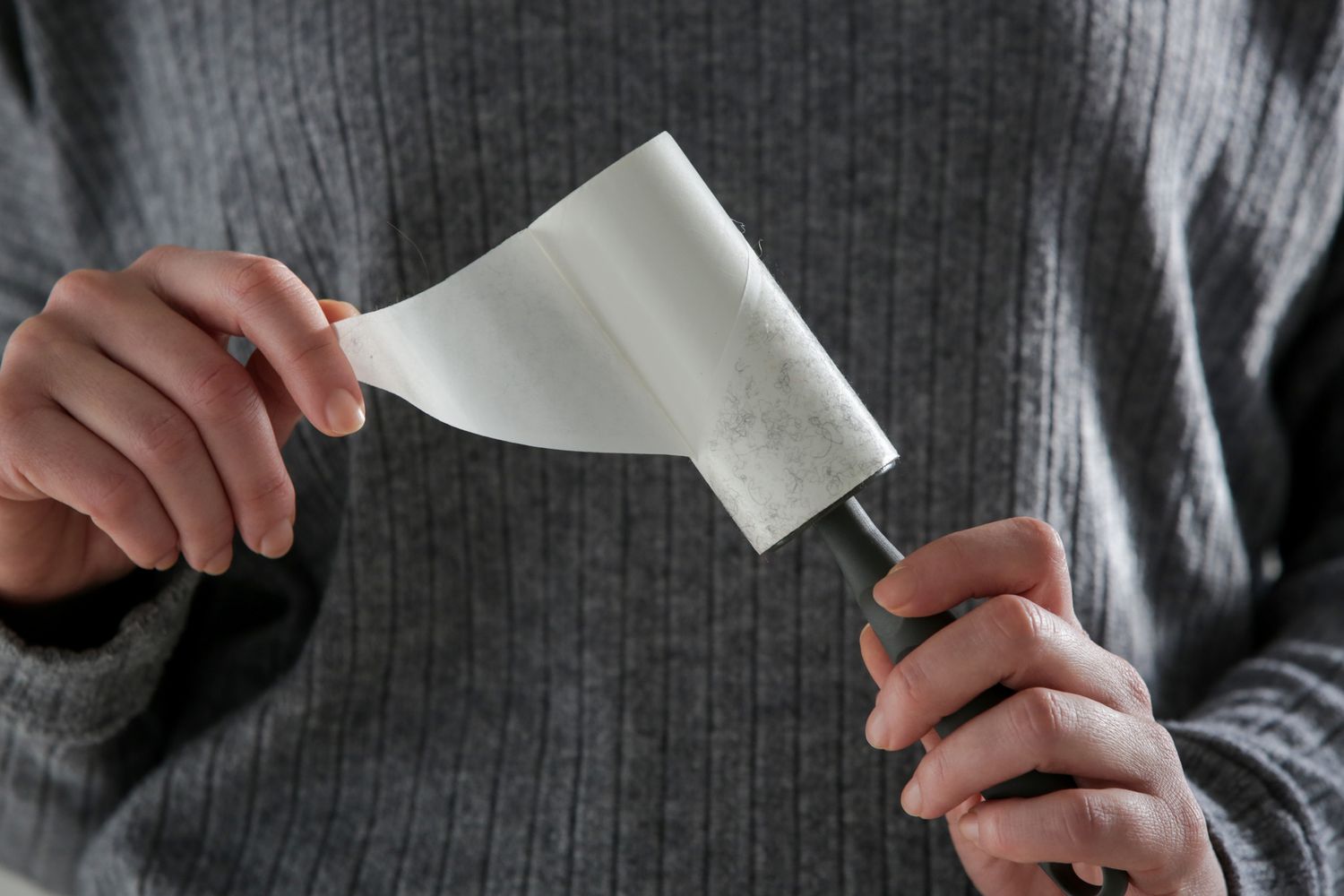
If you’re stuck without a tool, the quickest how to remove lint without a lint roller hack is using regular tape. Wrap masking or packing tape around your hand, sticky side out, and pat the fabric. Alternatively, a slightly dampened rubber glove rubbed over the fabric will ball up pet hair and lint instantly, making it easy to pull off by hand.
There are five other methods that work almost as well, some even better for specific fabrics. Here’s the full breakdown.
6 Lint Removal Methods That Actually Work
1. Tape (Masking, Packing, or Scotch)
Wrap a length of tape around your hand, sticky side out. Press onto the fabric and lift with a firm, swift motion. Repeat until clean. Packing tape is most aggressive and works best on heavy lint. Masking tape is gentler for delicate fabrics.
2. Rubber Gloves (Damp)
Put on a rubber or latex glove, dampen it slightly, then run your hand over the fabric in long strokes. The static from the rubber grabs lint and pills like a magnet. This method works exceptionally well on wool and fleece.
3. Tumble Dryer with a Dry Towel
Toss the linty item in the dryer with a clean, dry towel for 10 minutes on a low-heat setting. The agitation and airflow pull lint off and into the lint trap. Works best for large items like jumpers, jackets, and trousers.
4. Fabric Softener Spray
Mix one part fabric softener with three parts water in a spray bottle. Lightly mist the garment, then shake it out. The softener relaxes the fibres slightly, releasing trapped lint. Particularly useful for synthetic fabrics that hold static.
5. Velcro Strip or Brush
The hook side of Velcro (the scratchy part) grabs lint just like a lint brush. This is useful if you have Velcro around the house. A stiff-bristle garment brush works similarly and is excellent for wool coats and blazers.
6. Pumice Stone (for Heavy Pills)
For heavily pilled fabric – the little fabric balls you get on fleeces and knits – a pumice stone gently buffs them off without damaging the garment. Run it lightly over the surface in one direction. It sounds aggressive but works surprisingly well.
What Works Best on Each Fabric
| Method | Cotton | Wool / Fleece | Synthetics | Silk / Delicates |
|---|---|---|---|---|
| Tape | ✓ Excellent | ✓ Good | ✓ Excellent | ✓ Gentle tape only |
| Rubber glove (damp) | ✓ Good | ✓ Excellent | ✓ Very good | ✗ Not recommended |
| Dryer + towel | ✓ Excellent | ✗ Risk of shrinking | ✓ Good | ✗ Not recommended |
| Fabric softener spray | ✓ Good | ✓ Good | ✓ Excellent | ✓ Diluted only |
| Velcro / brush | ✓ Good | ✓ Excellent (brush) | ✓ Good | ✗ Too abrasive |
| Pumice stone | ✓ For pilling only | ✓ Excellent for pills | ✓ For pilling only | ✗ Too abrasive |
How to Prevent Lint Buildup
- Wash similar fabrics together – washing towels with dark clothing is a classic lint-spreading mistake
- Turn garments inside out before washing – reduces surface pilling and lint collection
- Use a mesh laundry bag for delicates – stops fibre transfer between items
- Clean your dryer lint trap every single cycle – a full trap means lint goes back onto your clothes
- Don’t overfill the washer or dryer – friction between items causes pilling
The fastest everyday solution: keep a roll of masking tape in your wardrobe. Tear off a piece when needed. It’s not glamorous, but it’s reliable, cheap, and works on almost everything.
