
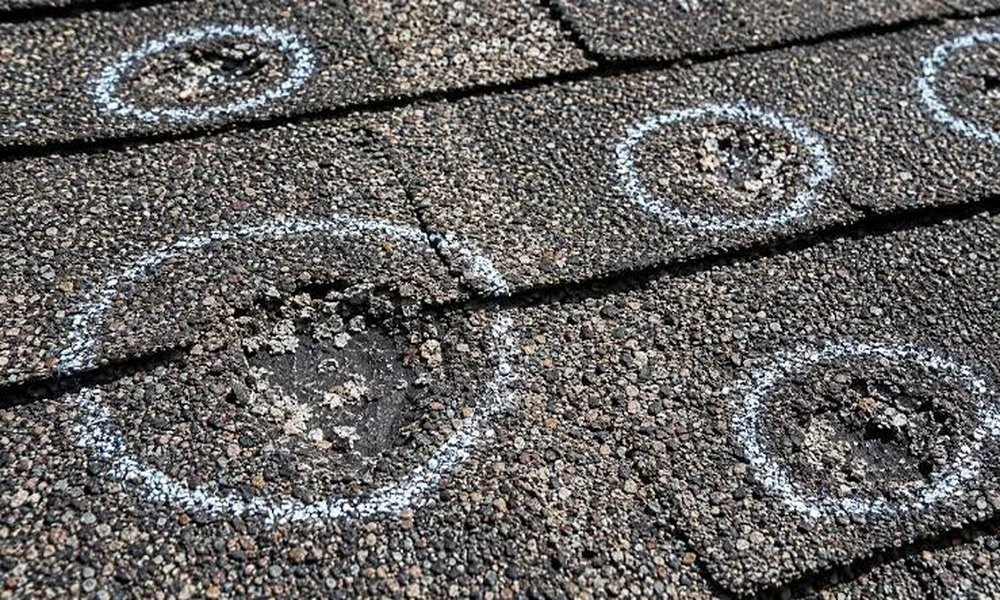
The morning after a spring hailstorm in St. Charles County looks oddly calm. Shredded maple leaves cover the lawn, a few car hoods have new dimples, and the roof looks about the same as it did yesterday from the driveway. That’s where most homeowners stop looking. It’s also where most of the useful evidence starts.
Hail rarely hits only the roof. Wind pushes it sideways into walls, windows and anything metal along the way, and those lower surfaces are often easier to read than shingles twenty feet up. If you know where to look, a walk around the house tells you much of what a roof inspection will later confirm.
Homeowners on both sides of the river who’d rather have a second set of eyes can call Primal Roofing & Restoration, a Defiance contractor that has been working on roofs, siding, gutters and windows around greater St. Louis since 2006. Its crews do free inspections, document damage for insurance claims and take on emergency tarping when a storm opens something up. The service area runs from Wentzville and Chesterfield across to Alton, Edwardsville and Belleville in Illinois.
Begin at the Curb, Not the Ladder
Soft metal is the most honest witness after a storm because it dents and stays dented. Before you look at the house, check the smaller things around it.
- The mailbox and any lamp post caps
- The fins and top grille of the AC condenser
- Painted metal on fences, sheds and patio furniture
- The vents and flashing you can see from the ground
- Window screens on the side that faced the storm
Spatter marks matter too. Hail knocks dirt, oxidation and old paint chalk off surfaces, leaving round light-colored spots. They fade within days as rain and sun even the surfaces out again, so photograph them first. The Insurance Institute for Business & Home Safety points to this kind of collateral evidence as one of the clearest ways to separate a real hail event from ordinary aging, which is exactly the argument an adjuster will be weighing.
A few homeowners circle dents with sidewalk chalk before photographing them. It looks a little silly, but it makes small marks show up on a phone camera.
Gutters Keep a Record of the Storm
Gutters work like a rain gauge for hail. Run your eye along the top front edge, which takes direct hits, and look for a rippled line of small dents. Downspouts tell the same story along their sides, especially the elbows near the ground.
Dents on their own are mostly cosmetic. Problems start when hail crushes a section deep enough to change how water flows, cracks a seam, or bends the hangers so the gutter pulls away from the fascia. Water then spills over in heavy rain and lands right where the foundation least needs it.
Look at what has washed out of the downspouts as well. A fan of dark, sandy granules at the outlet after a storm usually means shingles lost part of their protective coating. Some granule loss is normal on a new roof, but a sudden pile after a hail night is worth noting.
Siding Shows Which Way the Wind Was Blowing
Storms in this part of Missouri tend to push in from the west and southwest. Hail driven by that wind hits the walls facing it and barely touches the opposite side. Walking all four elevations and comparing them is one of the simplest ways to show a pattern of storm damage rather than random wear.
Each material fails in its own way.
Vinyl gets brittle in cold weather, and a spring storm with temperatures in the 40s or 50s can punch clean holes or leave star-shaped cracks that never fully close. Chalky, sun-faded vinyl on south and west walls cracks more easily than newer panels.
Fiber cement shrugs off most hail but can chip at corners, edges and nail lines. Exposed fiber at a chip needs paint before freeze-thaw cycles start working moisture into it.
Aluminum siding, still common on older homes in Florissant and St. Ann, dents like a gutter and shows every hit in low-angle morning light.
Wood and painted trim usually take spatter marks and small dents rather than splits, though old trim already softened by rot can break open.
Windows Hold Smaller but Telling Damage
Cracked glass is rare unless the stones were large. What hail does far more often is tear screens, dent the aluminum cladding wrapped around window frames, and chip the corners of vinyl frames. Aluminum wrap that once sealed tightly can pull loose after enough hits, letting water reach the wood beneath. Check the glazing beads and caulk lines too, because a frame knocked slightly out of square will start leaking at the next wind-driven rain.
Then the Roof Finally Gets Its Turn
With all of that in hand, the roof inspection has context. On asphalt shingles, hail leaves bruises that feel soft when pressed, dark spots where granules are gone, and sometimes cracks in the mat itself. Dents in roof vents, ridge caps and step flashing confirm the hits. Recent research from IBHS also suggests that smaller hail, long dismissed as harmless, can wear shingles down over repeated storms, which is reshaping how some older roofs are evaluated.
Getting on the roof is a job for someone with fall protection and experience telling bruising from blistering and normal granule wear. A careful inspector will photograph test squares on each slope, which become the backbone of an insurance file.
What the Evidence Means for a Claim
Once the clues line up, a claim usually follows. Most policies set a deadline for reporting storm damage, so check your declarations page rather than waiting to see if a leak shows up. Having your own photos of the soft metals, the siding pattern and the gutter granules in the file before the adjuster arrives keeps the conversation grounded in evidence.
Matching often turns into a negotiation. If hail damages one wall of siding and the original color has been discontinued, replacing just that wall can leave a mismatched house. How that gets handled depends on the policy wording and sometimes on state rules, so it is worth raising early.
Contractor licensing differs depending on which side of the river you live on. Illinois requires a state roofing license, and you can look up any company working in Metro East. Missouri has no statewide roofing license, which is part of why door-knocking storm crews tend to flood St. Louis County after a big hail event. Asking for a local address, proof of insurance and a written scope protects you whichever state you’re in.
Read together, the dents, spatter and torn screens tell the whole story of the storm. A roof can look fine from the driveway for years while hail damage slowly shortens its life. The marks at eye level are often the first and best evidence that it happened.
