
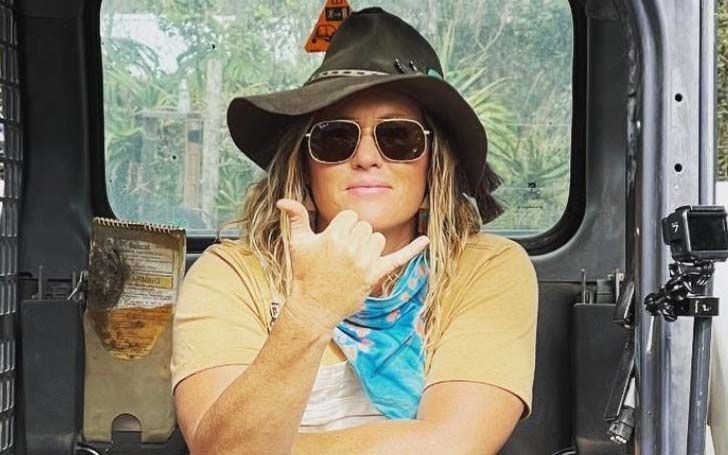
Misty Raney is the straight-talking farmer, master carpenter, and homestead builder who has become the breakout star of Discovery Channel’s hit series “Homestead Rescue,” where she works alongside her father Marty Raney and brother Matt Raney to rescue struggling homesteaders across America, bringing her no-nonsense approach, exceptional building skills, and deep agricultural knowledge to families on the brink of giving up their off-grid dreams.
| Misty Raney Bilodeau | |
|---|---|
| Born | November 9, 1979 |
| Birthplace | Sitka, Alaska, United States |
| Age | 45 years old (as of 2025) |
| Parents | Marty Raney (father), Mollee Roestel (mother) |
| Siblings | Matt Raney (co-star), Miles Raney, Melanee Raney |
| TV Show | Homestead Rescue (Discovery Channel, 2016-present, Season 12) |
| Role on Show | Farmer, homestead builder, carpenter |
| Specialty | Greenhouses, smokers, food preservation, predator-proof enclosures |
| Married | Maciah Bilodeau (March 17, 2000) |
| Children | Gauge (born 2011) |
| Residences | Alaska (summer – 800 sq ft Hatcher Pass cabin), Hawaii (winter) |
| Family Business | Alaska Stone and Log (summers) |
| Famous Quote | “You can grow food anywhere, it is all about technique” |
| @mistyraneybilodeau (116K+ followers) | |
| Show Schedule | Tuesdays at 8pm ET on Discovery Channel |
| Related Shows | Homestead Rescue: Raney Ranch |
Since “Homestead Rescue” premiered in 2016, Misty Raney has transformed from the youngest member of the Raney rescue team into a beloved television personality whose practical wisdom, building expertise, and genuine empathy for struggling homesteaders have made her an invaluable asset to the show’s mission of helping families survive and thrive off the grid.
What sets Misty apart on the show isn’t just her remarkable skillset—building greenhouses from scratch, predator-proofing livestock enclosures against bears and mountain lions, turning harvests into year-long food supplies—but her ability to connect with the women and matriarchs of homesteading families who often feel overwhelmed by the physical and emotional demands of off-grid living while raising children in remote, challenging environments.
Now in its 12th season, “Homestead Rescue” continues to showcase Misty Raney’s evolution from skilled carpenter to indispensable problem-solver whose famous declaration—”You can grow food anywhere, it is all about technique”—has become a rallying cry for homesteaders who face seemingly impossible growing conditions in Alaska’s frozen tundra, Montana’s rugged mountains, or Hawaii’s tropical challenges.
The Raney Family Legacy
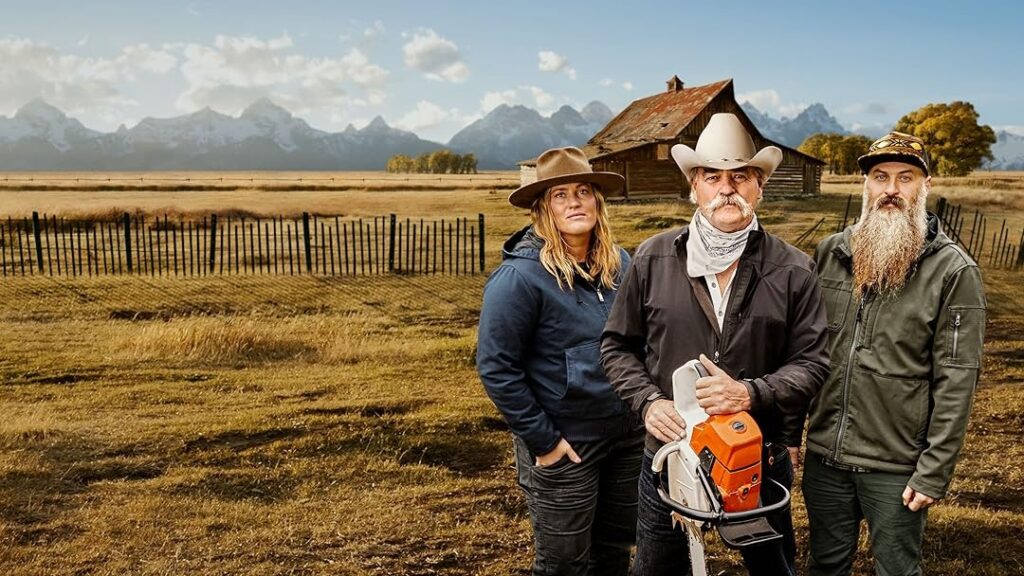
Understanding Misty’s role on “Homestead Rescue” requires appreciating the Raney family’s deep homesteading roots. Her father Marty Raney is a legendary Alaskan survivalist, mountain climber, and musician who raised his four children—Miles, Melanee, Matt, and Misty—in the remote wilderness of Alaska, teaching them hunting, fishing, building, and the thousand skills required to thrive where most people would barely survive.
Growing up, Misty worked in the family business, Alaska Stone and Log, learning carpentry, construction, and building techniques from her father and siblings. This wasn’t theoretical education—it was hands-on training building actual cabins, outbuildings, and homestead infrastructure in some of Alaska’s harshest environments.
The Raney children learned that homesteading isn’t romantic—it’s relentless work requiring skills in dozens of areas. You must be carpenter, plumber, electrician, farmer, hunter, butcher, mechanic, veterinarian, and problem-solver, often simultaneously. This comprehensive education prepared Misty perfectly for her role helping struggling homesteaders on the show.
The Premise of Homestead Rescue
“Homestead Rescue” follows a simple but compelling format: families attempting to live off-grid in remote locations across America call for help when their homesteading dreams turn into survival nightmares. The Raney family—Marty, Matt, and Misty—arrives to assess the situation, identify critical problems, and implement solutions in a matter of weeks.
The show’s genius lies in its authenticity. Unlike many reality shows that manufacture drama, “Homestead Rescue” features genuine families facing real dangers—inadequate shelter heading into winter, contaminated water sources, non-existent food security, predator threats to livestock, and structural failures that could prove deadly. The stakes are real, the solutions must work, and the Raneys’ expertise is tested repeatedly.
Each episode typically follows this structure:
- Initial Assessment – The Raneys arrive and evaluate the homestead’s critical failures
- Priority Identification – They determine which problems threaten immediate survival
- Solution Implementation – The team builds, repairs, and teaches over several weeks
- Skills Transfer – They ensure the family can maintain systems after the Raneys leave
- Follow-Up – Checking whether families successfully implemented lessons
This format showcases each Raney family member’s specialties. Marty handles overall strategy, major construction, and water systems. Matt focuses on hunting, fishing, and predator management. Misty tackles agriculture, food preservation, greenhouses, and often the most creative building solutions.
Misty’s Role: More Than Just the Female Perspective
When “Homestead Rescue” first aired, viewers might have expected Misty to handle traditional “women’s work”—gardening, cooking, preserving—while the men tackled building and hunting. Misty immediately shattered those expectations by proving herself as skilled with a hammer as any carpenter, as capable of heavy construction as her father and brother, and as willing to get dirty solving problems.
Her specialties on the show include:
| Misty’s Expertise | Application on Show |
|---|---|
| Greenhouse Construction | Builds functional greenhouses in extreme climates using locally available materials |
| Food Preservation | Teaches families to smoke, cure, ferment, and store food for year-round nutrition |
| Garden Design | Creates productive gardens even in short growing seasons or poor soil |
| Livestock Management | Builds predator-proof enclosures protecting chickens, goats, pigs from bears and mountain lions |
| Water Systems | Designs irrigation and water collection systems for gardens |
| Creative Problem-Solving | Repurposes salvaged materials into functional homestead infrastructure |
| Teaching | Connects with homesteading wives/mothers, providing encouragement and practical skills |
What makes Misty particularly valuable is her ability to see solutions others miss. In one memorable episode, she built a greenhouse using salvaged windows and materials already on the property, creating a functional structure for almost no money—critical for cash-strapped homesteaders. In another, she designed a smokehouse that doubled as a food storage facility, maximizing the value of every built structure.
Season 12: New Challenges and Continuing Mission
“Homestead Rescue” Season 12, which premiered on October 27, 2024, on Discovery Channel, brings the Raney family to even more extreme situations. The season opener, “Lone Wolf,” features Marty responding to a distress call after a tragic airplane crash left a fellow homesteader stranded and unprepared for approaching winter—the kind of life-or-death scenario that reminds viewers these aren’t manufactured emergencies but real survival situations.
Episode 4, “Mystery of Cursed Ground,” finds the Raneys investigating the unexplained disappearance of vital resources on a Virginia homestead, combining their practical skills with detective work to solve problems that have the family considering abandoning their property.
Throughout Season 12, Misty continues demonstrating why she’s become indispensable to the show’s success. Her recent Instagram post teased: “Season 12 is coming soon AND we are almost done with our first homestead for season 13!!! Big year for Homestead Rescue fans.”
The show’s enduring popularity—now in its 12th season—speaks to its authentic approach and the Raney family’s genuine commitment to helping families succeed rather than simply creating television drama.
The Straight-Talking Provider
Misty’s on-screen personality combines warmth with directness. She’ll tell homesteaders exactly what’s wrong with their setup and precisely how to fix it, without sugar-coating difficult truths. This straight-talking approach sometimes creates tension—particularly with homesteaders who resist advice or cling to failed methods—but ultimately serves families better than empty encouragement.
In one notable instance captured by IMDb reviewers, Misty faced a homesteader who refused to take advice from a woman despite calling the Raneys for help. His narcissistic resistance to her expertise—saying “I’m the one who lives here so I know what it’s really like”—highlighted both the gender biases some homesteaders bring and Misty’s professional grace in handling dismissive attitudes while still trying to help the family survive.
These moments reveal Misty’s strength: she doesn’t need male validation to know her expertise is valuable. She’ll offer her knowledge, implement solutions, and teach skills regardless of whether homesteaders initially appreciate her contributions. The results speak for themselves—her greenhouses grow food, her smokers preserve meat, her livestock enclosures protect animals.
Balancing Show Life with Personal Homesteading
What makes Misty Raney credible on “Homestead Rescue” is that she lives the lifestyle she teaches. She and her husband Maciah Bilodeau, a carpenter and surfer, split their time between their 800-square-foot cabin at Hatcher Pass in Alaska and their home in Hawaii.
This dual-residence arrangement allows them to homestead in Alaska during summer months while escaping harsh winters for Hawaii’s more temperate climate where Maciah can surf and Gauge can attend school. They help run the family business Alaska Stone and Log during Alaska summers, maintaining the hands-on experience that keeps Misty’s skills sharp and her knowledge current.
Living in an 800-square-foot cabin—far smaller than most American homes—means Misty understands the space constraints homesteaders face. She knows what it’s like storing a year’s food supply in limited space, managing water and waste systems, heating efficiently, and making every square foot functional.
This authentic experience translates directly to the show. When Misty designs solutions for homesteaders, she draws on personal knowledge of what actually works versus what sounds good theoretically. Her recommendations come from lived experience, not books or speculation.
Homestead Rescue: Raney Ranch
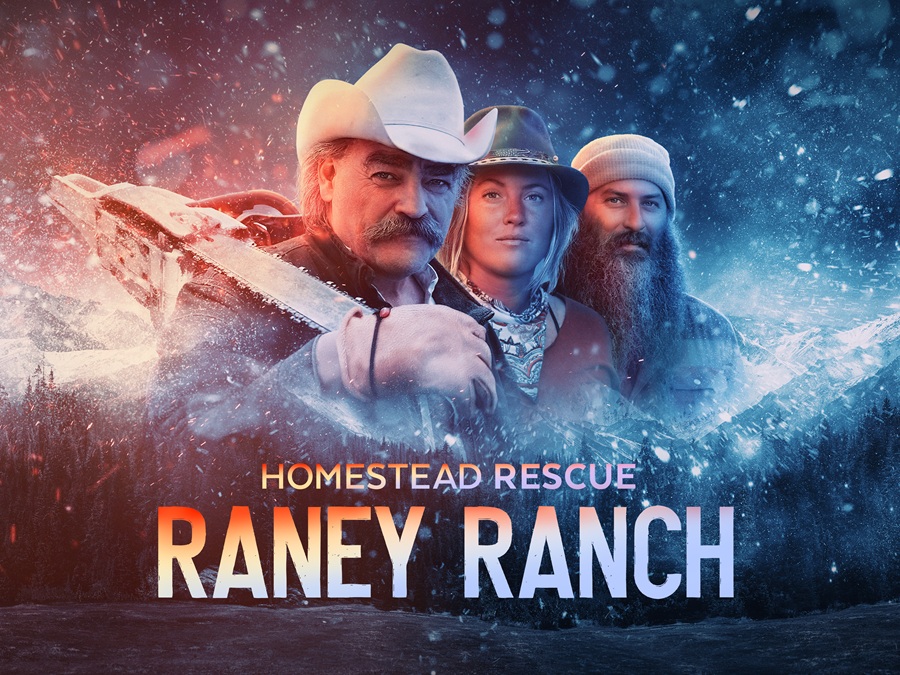
In addition to the main “Homestead Rescue” series, Misty stars in “Homestead Rescue: Raney Ranch,” a spinoff that premiered in October 2020 showing the Raney family building their own multi-generational homestead on a 300-foot cliff—a location that was previously inaccessible and required creative solutions for transporting materials and equipment via land, water, and helicopter.
This spinoff gave viewers insight into the Raney family dynamics and demonstrated that even experienced homesteaders face enormous challenges when building in extreme locations. Marty, Mollee (Misty’s mother), and the extended Raney family had just six weeks to construct the main cabin, greenhouse, garden, workshop, and additional cabins.
The series faced real danger when a cabin fire nearly derailed the entire homestead dream, and later when an inferno engulfed Marty and Mollee’s cabin at winter’s onset. These weren’t scripted disasters—they were genuine setbacks testing the family’s resilience and problem-solving abilities under pressure.
Watching Misty work on her family’s homestead alongside helping strangers demonstrated her versatility and commitment. She approaches her family’s needs with the same professionalism and skill she brings to “Homestead Rescue,” proving her expertise isn’t just for show.
The Educational Impact
Beyond entertainment, “Homestead Rescue” serves as invaluable education for anyone interested in off-grid living. Misty’s segments teaching food preservation, greenhouse construction, and garden planning provide actionable knowledge that viewers can implement regardless of whether they’re full-time homesteaders or suburban gardeners looking to increase self-sufficiency.
Her famous quote—”You can grow food anywhere, it is all about technique”—encapsulates the show’s educational mission. Climate, soil quality, and growing season matter, but technique, knowledge, and persistence matter more. Misty demonstrates this repeatedly, building productive gardens in Alaska’s short summers, Hawaii’s tropical conditions, and everywhere in between.
The show’s IMDb reviews highlight this educational value. One viewer wrote: “The show is as educational as it is entertaining. Every episode you get to see some new approach to problems that are custom made on the spot through this family’s ingenious problem solving.” Another noted: “They’re not just homestead rescuers, they’re homesteader rescuers too. They re-light the fire and passion for that way of life in every family they help.”
Behind the Scenes: How Homestead Rescue Actually Films
Interviews with families featured on the show reveal the production process. When Ozark County homesteaders Wren and Ini were selected for an episode, they described a crew of 20 people arriving with RVs and equipment to film over several weeks. The director and site manager scouted locations and met with locals before filming began.
Interestingly, the families’ first meeting with the Raneys actually occurs on camera—they’re kept in their dwelling while the crew sets up, then emerge to meet Marty, Matt, and Misty for the first time during filming. This creates the genuine reactions viewers see on screen.
Wren and Ini described an intense four-hour conversation with the Raneys about tearing down their mold-infested yurt that was edited down for television suspense. The Raneys didn’t initially reveal what they’d build to replace it, creating the resistance viewers saw. Once the couple learned about the beautiful log cabin planned, they were “all in and pretty excited.”
This behind-the-scenes glimpse reveals that while some drama is edited for entertainment, the core expertise, problem-solving, and building happens genuinely. Misty actually cleaned the moldy yurt with bleach in the rain—that wasn’t staged. The solutions built actually work—the families continue using them long after filming ends.
Impact on Families and Viewers
The show’s ultimate measure of success isn’t ratings but whether families actually survive and thrive after the Raneys leave. Follow-up segments show many families successfully implementing the skills and systems the Raneys taught, with some even expanding beyond what was built during filming.
Wren and Ini reported that the Raneys “really gave us a boost with the things they set up for us here. We are happily living in the beautiful finished log cabin with a wood stove.” They finished additional buildings using materials and techniques learned during filming, completed their solar system, and restored their yurt to serve as a guest bedroom and library.
These success stories validate the Raney approach and demonstrate that Misty’s teaching methods work. She doesn’t just build for families—she empowers them to continue building themselves.
The Future of Homestead Rescue
With Season 12 underway and Season 13 already in production according to Misty’s social media, “Homestead Rescue” shows no signs of slowing down. The show’s enduring appeal stems from its authenticity, the Raney family’s genuine expertise, and the universal fascination with self-sufficient living.
Misty Raney has evolved from the youngest Raney family member into a co-equal star whose skills, personality, and teaching ability have made her indispensable to the show’s success. Her Instagram following of 116,000+ demonstrates that she’s built her own fan base attracted to her specific expertise and approach.
As modern life becomes increasingly complex and people search for simpler, more self-sufficient alternatives, shows like “Homestead Rescue” provide both inspiration and practical knowledge. Misty Raney’s role as the straight-talking provider who can build anything from scratch, grow food anywhere, and teach families to survive serves as proof that with the right knowledge, determination, and willingness to work hard, the homesteading dream remains achievable—even when it requires calling in Alaska’s toughest family to make it happen.
